
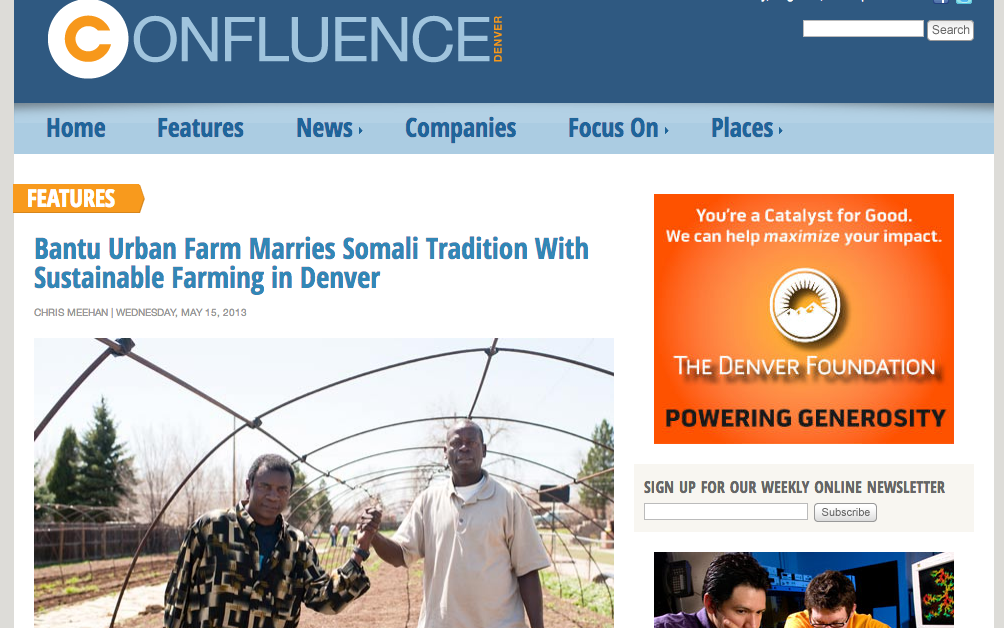
Bantu Urban Farm Marries Somali Tradition With Sustainable Farming in Denver
Somali Bantu refugees have teamed with Revision and other local nonprofit organizations to launch the Ubuntu Urban Farm in Denver's Westwood neighborhood. They're planting the seeds to continue long-held cultural traditions with a twist: a much different climate.
Somali Bantu refugees have teamed with Revision and other local nonprofit organizations to launch the Ubuntu Urban Farm in Denver's Westwood neighborhood. They're planting the seeds to continue long-held cultural traditions with a twist: a much different climate.
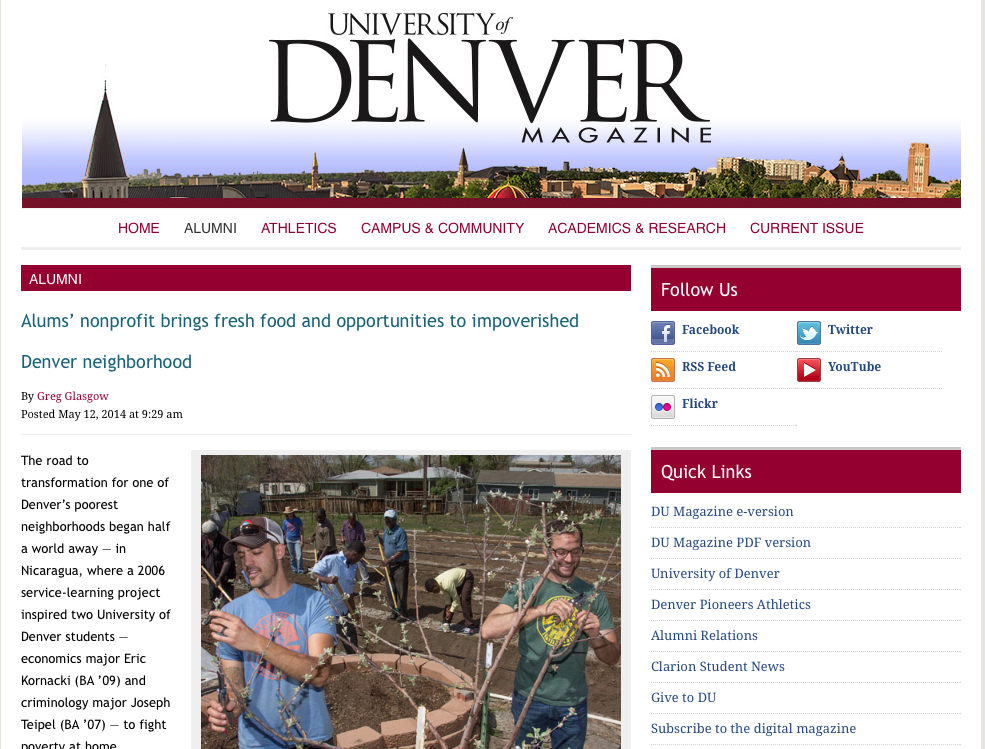
Alums’ nonprofit brings fresh food and opportunities to impoverished Denver neighborhood
The road to transformation for one of Denver’s poorest neighborhoods began half a world away — in Nicaragua, where a 2006 service-learning project inspired two University of Denver students — economics major Eric Kornacki (BA ’09) and criminology major Joseph Teipel (BA ’07) — to fight poverty at home.
The road to transformation for one of Denver’s poorest neighborhoods began half a world away — in Nicaragua, where a 2006 service-learning project inspired two University of Denver students — economics major Eric Kornacki (BA ’09) and criminology major Joseph Teipel (BA ’07) — to fight poverty at home.
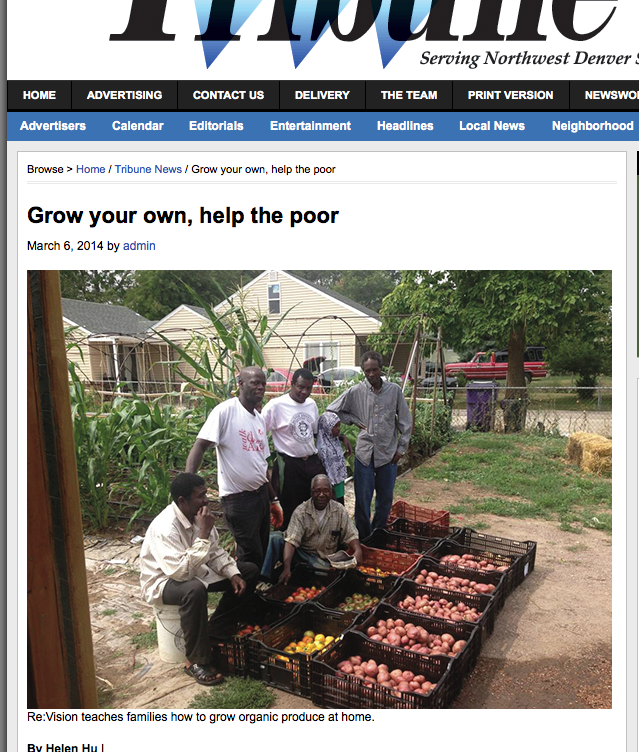
Grow your own, help the poor
A local non-profit that has won recognition for helping poor families grow vegetables is now offering its services to anyone who wants to make a difference.
Re:Vision International has worked with families in Westwood, a predominantly Hispanic neighborhood in southwest Denver, since 2009.
A local non-profit that has won recognition for helping poor families grow vegetables is now offering its services to anyone who wants to make a difference.
Re:Vision International has worked with families in Westwood, a predominantly Hispanic neighborhood in southwest Denver, since 2009.

Soda-Can Furnaces Powered by Solar Energy Heat Denver Neighborhood
Aaron Brown has built water heaters for schools in Costa Rica and done charity work all around the world. But the Metropolitan State University of Denver professor says some of the most rewarding work he's ever done is happening right now in Denver's Westwood neighborhood.
Aaron Brown has built water heaters for schools in Costa Rica and done charity work all around the world. But the Metropolitan State University of Denver professor says some of the most rewarding work he's ever done is happening right now in Denver's Westwood neighborhood.
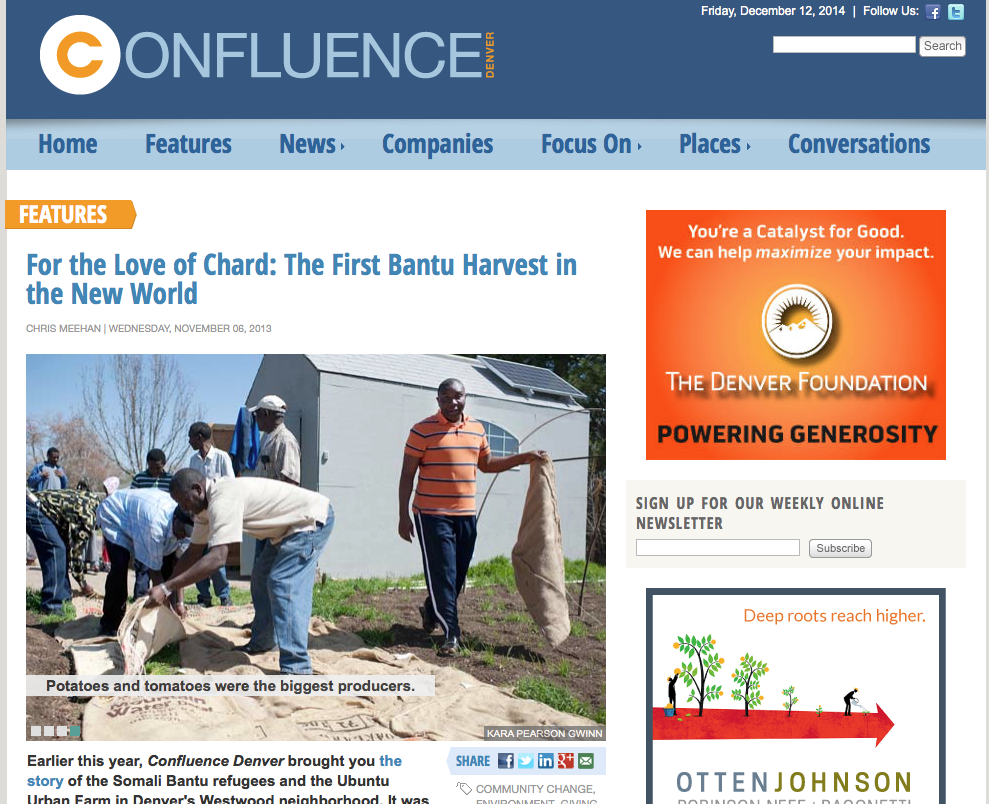
For the Love of Chard: The First Bantu Harvest in the New World
It was the beginning of a learning experience for the refugees of war-torn Somali who, though farmers by tradition, were not used to farming in a climate anything like Colorado's. Now they've harvested their first full season of crops, providing them to the Bantu, CSA (community-supported agriculture) members and a restaurant.
It was the beginning of a learning experience for the refugees of war-torn Somali who, though farmers by tradition, were not used to farming in a climate anything like Colorado's. Now they've harvested their first full season of crops, providing them to the Bantu, CSA (community-supported agriculture) members and a restaurant.
Slow Money Entrepreneur of the Year Focuses on Food Justice
Eric Kornacki, Co-founder and Executive Director of Revision, highlights the organization’s past successes. Many of these successes are due to the promotora model, which helps Revision achieve its goal of creating of self-sufficient community food systems through resident empowerment. Kornacki also talks about Revision’s future plans using grants to further development in the community and empower its members.
Eric Kornacki, Co-founder and Executive Director of Revision, highlights the organization’s past successes. Many of these successes are due to the promotora model, which helps Revision achieve its goal of creating of self-sufficient community food systems through resident empowerment. Kornacki also talks about Revision’s future plans using grants to further development in the community and empower its members.
Slow Food, Slow Money
It was the final presentation, however, that brought a standing ovation–and, ultimately, the Gathering’s $50,000 prize. Revision International works in Westwood, a Denver neighborhood where the average family income is just over $11,000 and one-third the residents are under 18.
It was the final presentation, however, that brought a standing ovation–and, ultimately, the Gathering’s $50,000 prize. Revision International works in Westwood, a Denver neighborhood where the average family income is just over $11,000 and one-third the residents are under 18.

An Effort to Add a Key Ingredient to the Slow Food Movement: Investor Money
This New York Times article discusses the Slow Money Gathering at the Boulder Theater in Colorado where 650 food entrepreneurs met with high net-worth investors. “We’re united in mission, in that we’re all trying to change the food system,” said Jeffrey Greenberg. Ultimately though, Revision was named entrepreneur of the year and received a $50,000 prize and this shout out in the New York Times.
This New York Times article discusses the Slow Money Gathering at the Boulder Theater in Colorado where 650 food entrepreneurs met with high net-worth investors. “We’re united in mission, in that we’re all trying to change the food system,” said Jeffrey Greenberg. Ultimately though, Revision was named entrepreneur of the year and received a $50,000 prize and this shout out in the New York Times.
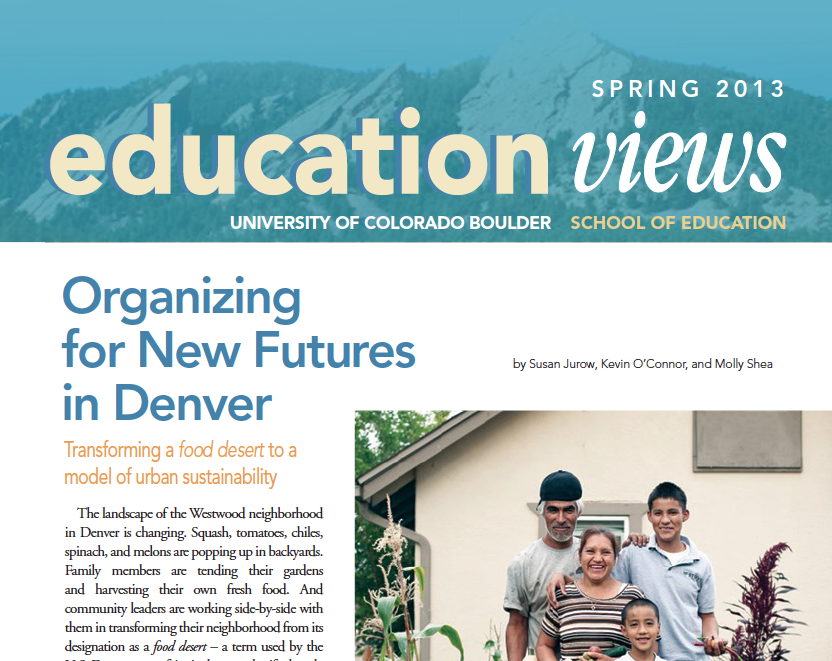
Organizing for New Futures in Denver
After learning about Revision and its programs, professors Educational Psychology & Learning Sciences Professors Susan Jurow and Kevin O’Connor, with doctoral candidate Molly Shea, MBA, were inspired. Together, they created the Learning in the Food Movement project to study how people work together to create better futures for themselves and their communities.
After learning about Revision and its programs, professors Educational Psychology & Learning Sciences Professors Susan Jurow and Kevin O’Connor, with doctoral candidate Molly Shea, MBA, were inspired. Together, they created the Learning in the Food Movement project to study how people work together to create better futures for themselves and their communities.
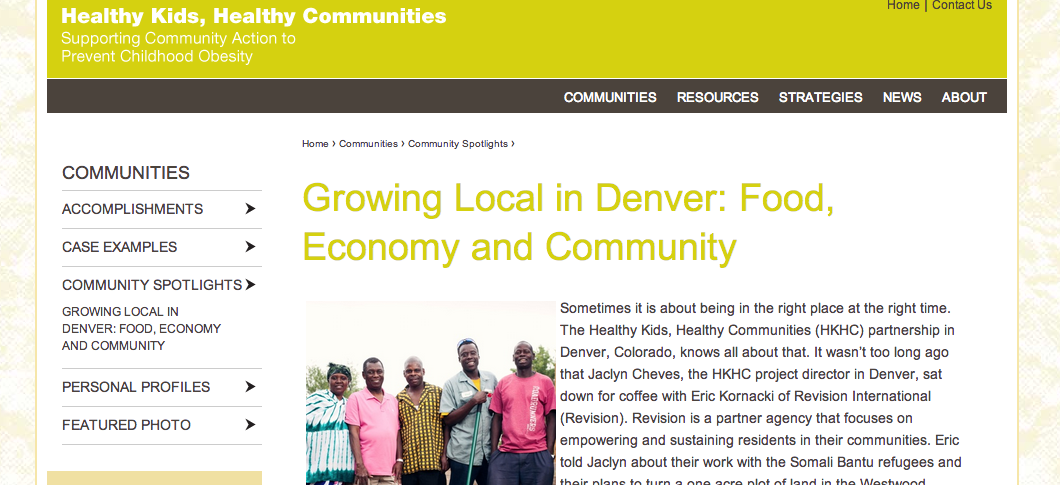
Growing Local in Denver: Food, Economy and Community
As Eric says, “In Westwood there is a lack of access to food and most people are living below the poverty line and can’t afford to eat healthy.” About six years ago, 40 Somali Bantu families who were farmers in their native land came to this area. When they arrived in Denver, a place with an 120-day growing season, they realized they would not be able to grow food in the same way as in their homeland.
As Eric says, “In Westwood there is a lack of access to food and most people are living below the poverty line and can’t afford to eat healthy.” About six years ago, 40 Somali Bantu families who were farmers in their native land came to this area. When they arrived in Denver, a place with an 120-day growing season, they realized they would not be able to grow food in the same way as in their homeland.
Violence prevention, health promotion coming together: Projects creating healthier neighborhoods
Revision International, a nonprofit organization that focuses on sustainability initiatives in low-income neighborhoods. “We’ve done surveys and community members have responded almost overwhelmingly that they don’t feel safe walking to a local retailer, both because of the built environment and also because of the perception of violence.”
Using urban gardening as a prevention strategy, the pilot project, Semillas de Esperanza, or “seeds of hope,” taught gardening skills to 12- to 17-year-olds who were at risk for joining a gang or were already in a gang.
Revision International, a nonprofit organization that focuses on sustainability initiatives in low-income neighborhoods. “We’ve done surveys and community members have responded almost overwhelmingly that they don’t feel safe walking to a local retailer, both because of the built environment and also because of the perception of violence.”
Using urban gardening as a prevention strategy, the pilot project, Semillas de Esperanza, or “seeds of hope,” taught gardening skills to 12- to 17-year-olds who were at risk for joining a gang or were already in a gang.